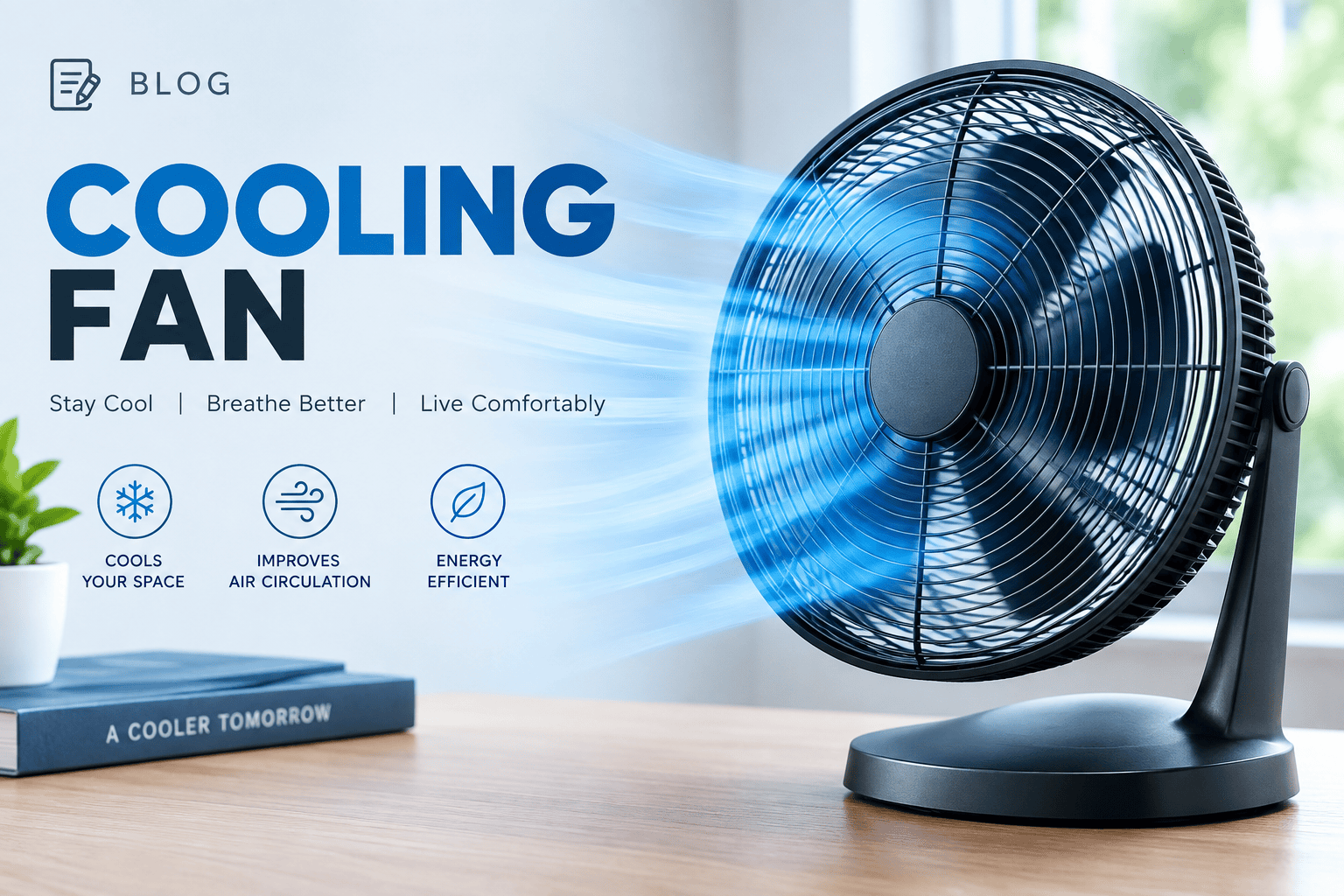
When temperatures rise, staying cool and comfortable becomes a priority. A cooling fan is one of the simplest and most practical ways to improve airflow and reduce the feeling of heat in your home, office, shop, or workspace. Unlike air conditioners, fans generally consume less electricity and are easy to install and use.
In this guide, we’ll explore what a cooling fan is, the different types available, their benefits, and the important factors to consider before buying one.
Sure — here’s a clean, SEO-friendly Table of Contents for your “Cooling Fan” blog:
Table of Contents
- What Is a Cooling Fan?
- Types of Cooling Fans
- Ceiling Fan
- Pedestal Fan
- Table Fan
- Wall-Mounted Fan
- Exhaust Fan
- Benefits of Using a Cooling Fan
- Lower Energy Consumption
- Better Air Circulation
- Easy to Use
- Portable Options
- Affordable Cooling Solution
- How to Choose the Right Cooling Fan
- Room Size
- Airflow
- Noise Level
- Energy Efficiency
- Speed Settings
- Safety Features
- Cooling Fan vs. Air Conditioner
- Tips for Getting Better Performance From Your Cooling Fan
- Conclusion
What Is a Cooling Fan?
A cooling fan is an electrical appliance designed to move air around a room or enclosed space. By creating airflow, it helps remove warm, stagnant air and provides a cooling sensation on the skin.
Cooling fans are available in different sizes, designs, and styles. Some are designed for personal use, while others can circulate air throughout larger rooms.
Types of Cooling Fans
Choosing the right fan depends on your room size, airflow requirements, and personal preferences. Here are some common types:
1. Ceiling Fan
Ceiling fans are mounted on the ceiling and are widely used in bedrooms, living rooms, offices, and other indoor spaces. They circulate air over a large area and can provide consistent airflow throughout a room.
2. Pedestal Fan
A pedestal fan usually has an adjustable height and a powerful motor. It can be moved from one location to another, making it a flexible option for homes, offices, and commercial spaces.
3. Table Fan
Table fans are compact and convenient for smaller areas. They are suitable for desks, bedside tables, offices, and other places where you need focused airflow.
4. Wall-Mounted Fan
A wall-mounted cooling fan is useful when floor and table space is limited. It can provide airflow across a specific area while keeping the floor clear.
5. Exhaust Fan
Exhaust fans are designed to remove hot, humid, or stale air from enclosed spaces. They are commonly installed in kitchens, bathrooms, workshops, and other areas where ventilation is important.
Benefits of Using a Cooling Fan
A good cooling fan can provide several practical advantages.
Lower Energy Consumption
Fans generally use less electricity than air-conditioning systems. Using a fan can therefore be a practical way to improve comfort while keeping energy consumption under control.
Better Air Circulation
A cooling fan helps move air around a room, reducing stagnant areas and improving overall ventilation.
Easy to Use
Most modern fans are simple to operate. Many models include multiple speed settings, oscillation functions, remote controls, or timers.
Portable Options
Pedestal and table fans can easily be moved from one room to another. This makes them useful when cooling is needed in different areas throughout the day.
Affordable Cooling Solution
Compared with installing a complete air-conditioning system, a cooling fan can be a more accessible option for improving airflow and comfort.
How to Choose the Right Cooling Fan
Before purchasing a cooling fan, consider the following factors:
Room Size
A small fan may be sufficient for a bedroom or personal workspace, while a larger room may require a fan with stronger airflow and wider coverage.
Airflow
Look for a model that provides enough airflow for the intended space. Fan speed settings can also make it easier to adjust airflow according to your needs.
Noise Level
If you plan to use the fan in a bedroom, study, or office, a quieter model may be more comfortable.
Energy Efficiency
Check the fan’s power consumption and energy-efficiency specifications, particularly if you expect to use it for many hours each day.
Speed Settings
Multiple speed settings give you greater control over airflow. Some models also offer different operating modes for added convenience.
Safety Features
Consider features such as protective grills, stable bases, thermal protection, and automatic shut-off functions.
Cooling Fan vs. Air Conditioner
A cooling fan and an air conditioner work differently. An air conditioner actively cools and dehumidifies the air, while a fan primarily moves air and creates a cooling sensation.
For mild or moderately hot conditions, a fan may provide sufficient comfort. In extremely hot weather, an air conditioner may be necessary to lower the actual room temperature.
In some situations, using a fan together with an air conditioner can help distribute cooled air more effectively.
Tips for Getting Better Performance From Your Cooling Fan
To get the most from your fan, keep the blades and protective grill clean. Dust buildup can affect airflow and may cause the fan to operate less efficiently.
Position the fan where it can circulate air effectively rather than blocking it with furniture or other objects. During cooler parts of the day, opening windows and using the fan to improve ventilation can also help.
Regularly check the power cord, plug, and other visible components for signs of damage.
Conclusion
A cooling fan is a simple and practical way to improve airflow and comfort in homes, offices, and commercial spaces. With options ranging from ceiling and pedestal fans to compact table and wall-mounted models, there is a fan suitable for almost every environment.
Before buying, consider room size, airflow, noise, energy consumption, speed settings, and safety features. Choosing a fan based on your specific needs can help you enjoy comfortable airflow while making practical use of your energy and budget.
If you want, I can also turn this into a 1,500–2,000 word SEO blog with a meta title, meta description, FAQs, headings, and related keywords for better search optimization.